


As Bernard Collaery’s friends and supporters celebrate the dropping of the prosecution against him, it is still relevant to ask, why were Witness K and his lawyer Collaery put on trial in the first place?
The facts are not in dispute. In 2004 the Australian Secret Intelligence Service (ASIS) planted microphones in the cabinet room of the Timor-Leste government in Dili. The information derived from this hostile act against the Timorese people helped the Australian side negotiate a great advantage in the division of oil resources in the Timor Sea. The ultimate beneficiary of the crime was Woodside Petroleum.
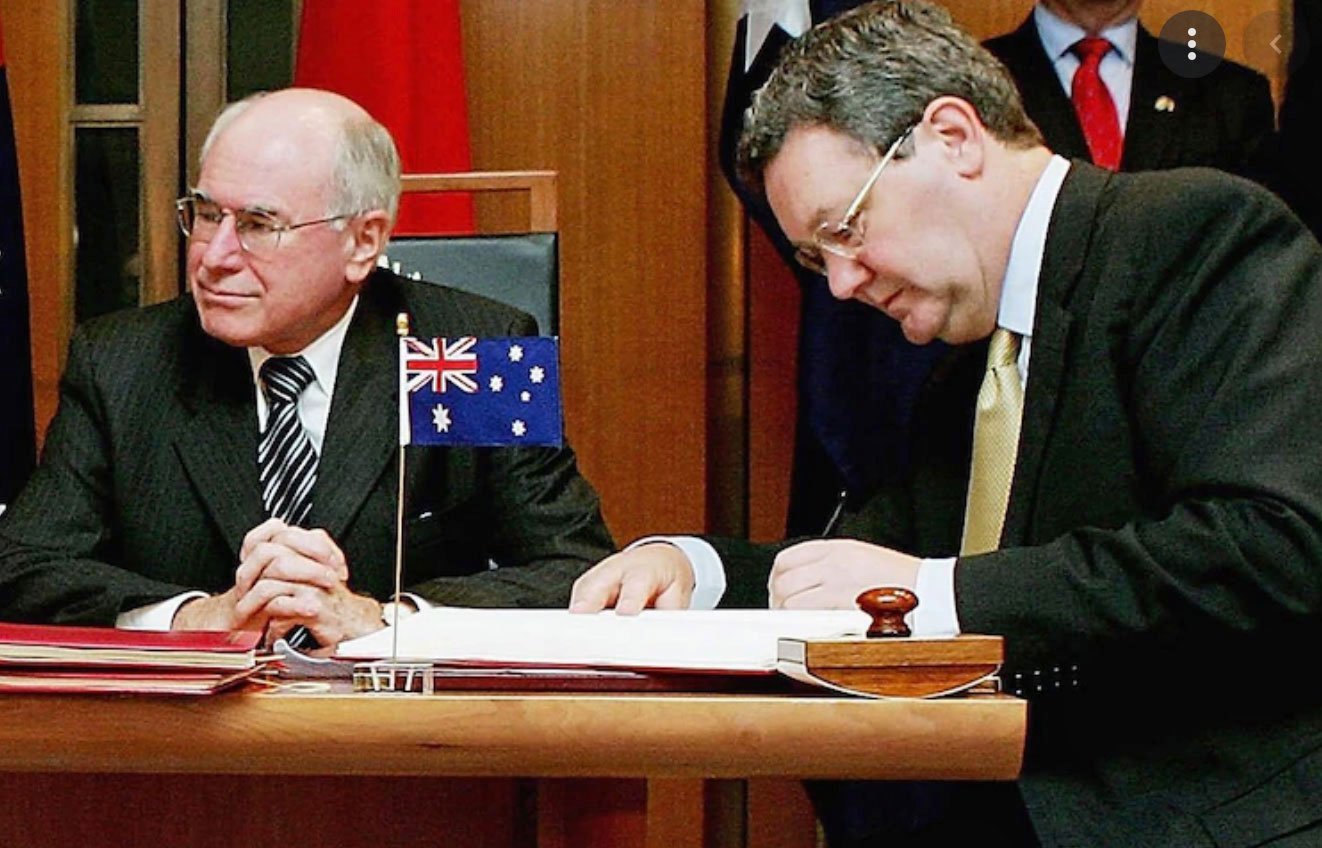
At the time of the illegal operation against Timor-Leste, John Howard was the Prime Minister, Alexander Downer the Foreign Minister, and the late David Irvine was Head of ASIS.
When in 2012 Alexander Downer was given employment by Woodside Petroleum, Witness K, the senior intelligence officer who led the 2004 operation, went public with the story. Julia Gillard, Prime Minister at the time, and possibly misled by the spooks, denied the facts of the case outright to PM Xanana Gusmão, who then took Timor-Leste’s grievance to the Permanent Court of Arbitration in The Hague.

Soon after Tony Abbott took power, ASIS raided the home of Witness K, seizing his passport so that he could not travel to The Hague to testify. The office of Bernard Collaery was also raided and documents relating to Timor-Leste’s case were unlawfully removed and only restored, two years later, after a ruling by the International Court of Justice.
In 2018 a new treaty restored the rights that had been stolen from Timor-Leste in 2004, but of course the original architects of the crime had not been brought to justice.
Also in 2018, five years after their premises were raided, Witness K and Bernard Collaery were charged with conspiring to communicate secret information to the government of Timor-Leste. Collaery was also accused of sharing information about the bugging operation to ABC journalists.
Both trials were held in secret, with defence lawyers denied access to much of the prosecution’s case. Although Witness K pleaded guilty and received a light sentence, Collaery’s trial under Attorney- General Christian Porter was vindictively drawn out and remained unfinished when the Coalition lost office. The new government has since waived the prosecution.
A cover up?
So why were Witness K and Bernard Collaery secretly tried under unfair circumstances for revealing – eight years after the event – an illegal overreach by Australian spooks?
The obvious interpretation of this story is that Howard, Downer and the ASIS chief Irvine are simply criminals, and that both sides of politics have covered up their guilt on the basis that people who rise to that level of power are untouchable, no matter what they do. The cover up is still uncomfortable, so it has been politic to try to destroy the lives of those who inconveniently present the truth, as a warning to others similarly inclined.
An alternative interpretation would be that the advantage given to Woodside Petroleum was accidental, and arose during the perfectly legitimate surveillance of the young and inexperienced Timor-Leste government, which was then being infiltrated by terrorists and Indonesian spies.
This would explain why Collaery had to be tried in secret under the National Security Information Act, which allows the government to conceal anything that might remotely touch on national security. Thus the bugging was never about screwing the Timorese out of their oil for the benefit of a fossil fuel corporation, it was all to do with genuine spy stuff.
Not even the Murdoch press has tried that line, so we can be confident that all is as it appears, and in a just world Howard and Downer would be facing the kind of sanctions currently faced by Julian Assange in an unjust one.
Therefore, until the government creates, as promised, better safeguards for whistleblowers, institutional culture will continue to reward criminals and punish heroes.

As The Echo editorial noted last week, the machinery of state repression is still grinding away against other whistleblowers, including David McBride and Richard Boyle. McBride brought Australian war crimes in Afghanistan into the open, and Boyle revealed unethical practices towards small businesses within the ATO. Both men should have their prosecutions waived.

To end on a hopeful note, the more fuss is made in public, the more politicians have to pay attention. Why not write to the Attorney-General: [email protected] urging him to do the right thing?
♦ David Lovejoy is co-founder of The Echo.
 For four decades The Echo has printed the stories some people loved, some people hated, and some pretended not to read. If you want us to keep telling the truth, the real truth, not the sugar-coated version. We’ll need your support to keep the presses rolling.


