

18.8 C
Byron Shire
July 15, 2026

Koalas return to protected area south of Evans Head

Latest News

Renewables and battery storage stable amid global uncertainty

Australia’s national science agency, CSIRO, in partnership with the Australian Energy Market Operator (AEMO) today released the GenCost 2025–26 Final Report, finding renewable energy supported by storage is helping to protect Australia against global energy shocks and continues to provide the lowest cost pathway for Australia’s electricity system to achieve net zero emissions.

Other News

Royal Life Saving training courses in Murwillumbah

Royal Life Saving NSW is the leader in drowning prevention and water safety education in the state and they are introducing a regular training service in Murwillumbah from August, that will be of benefit to all members of the broader community.

Mandy Nolan’s Soapbox: How the Phone Stole Us

When I was a child we didn’t have a phone. We couldn’t afford it. If we needed to make a call we went next door to the Clancys’ house and sat at their kitchen bench, lifted the receiver, turned the Bakelite handle three times, and waited for the operator.

Draft Bangalow Flood Study on public exhibition

A draft study examining flooding Bangalow is on exhibition by Byron Council.

Gulgan Village meeting

I attended the Brunswick Progress Associations (BPA) meeting on 6/07/2026 at the CWA for a discussion on the impact...

Emergency 000

When I worked for Telecom, I often manned the 000 position when it was still a cord and plug...

Invasive weed projects tackles 125 ha of Crown land

Ballina, Lismore, Kyogle and Richmond Valley shires are set to benefit from seven weed biosecurity projects, which the NSW government says will support the protection of native vegetation and the enhancement of wildlife habitats at key environmental sites.

Photo supplied

Indigenous rangers are celebrating the return of koalas to the Minyumai Indigenous Protected Area south of Evans Head, New South Wales.

In a media release WWF Australia says, ‘It’s a reversal of the grave concerns they held for their resident koalas when 90% of Minyumai IPA burned at the start of the 2019-20 horror bushfire season’.

‘The Minyumai rangers feared koalas – Boorubee in their language – had perished in the flames.

‘It was an absence Minyumai’s Traditional Owners, the Bandjalang people, felt deeply.

‘My great grandfather was a revered Elder who knew many of the old stories handed down. One story was that Boorubee were never to be hunted, but protected,’ said Bandjalang Elder Auntie Bonnie Wilson.

‘Fast forward to 2019 and following Pacific Highway upgrades and the fire, Boorubee were missing. The last sighting was in 2018.

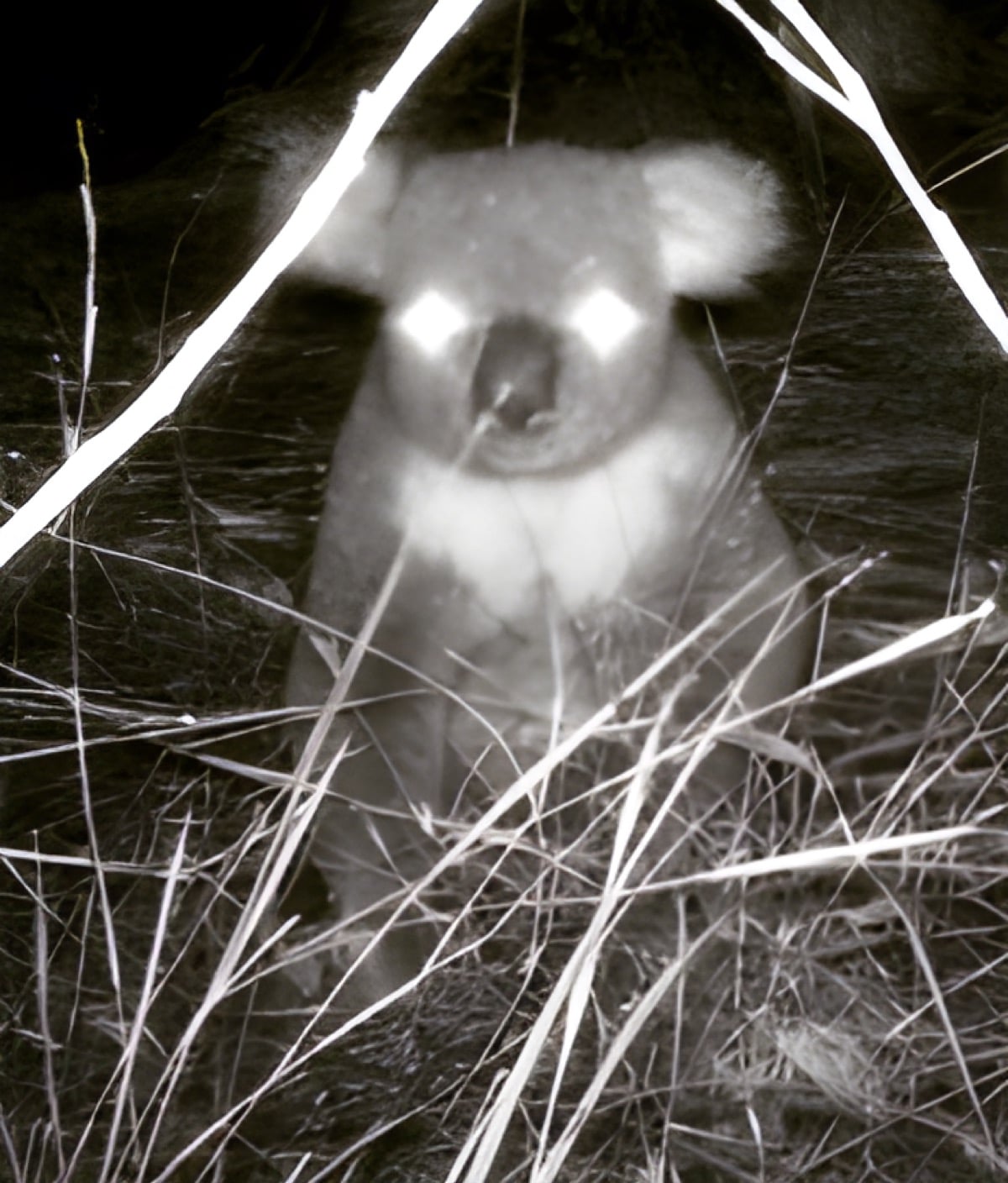
‘Then in June 2023 a breakthrough. One of the wildlife cameras the rangers set up to look for Boorubee photographed an individual they dubbed “Rubee”.

‘We were going through the photos and then we came across the koala and we were freaking out. We had no idea they were here. We were just so stoked. I knew then and there that I wanted to protect them. I wanted them back on Country and to conserve them and give them the feed and habitat trees they needed,’ said Senior Minyumai Ranger Maitland Wilson.

‘It was a huge boost for the Boorubee Monitoring & Recovery Project, led by Minyumai’s women rangers.
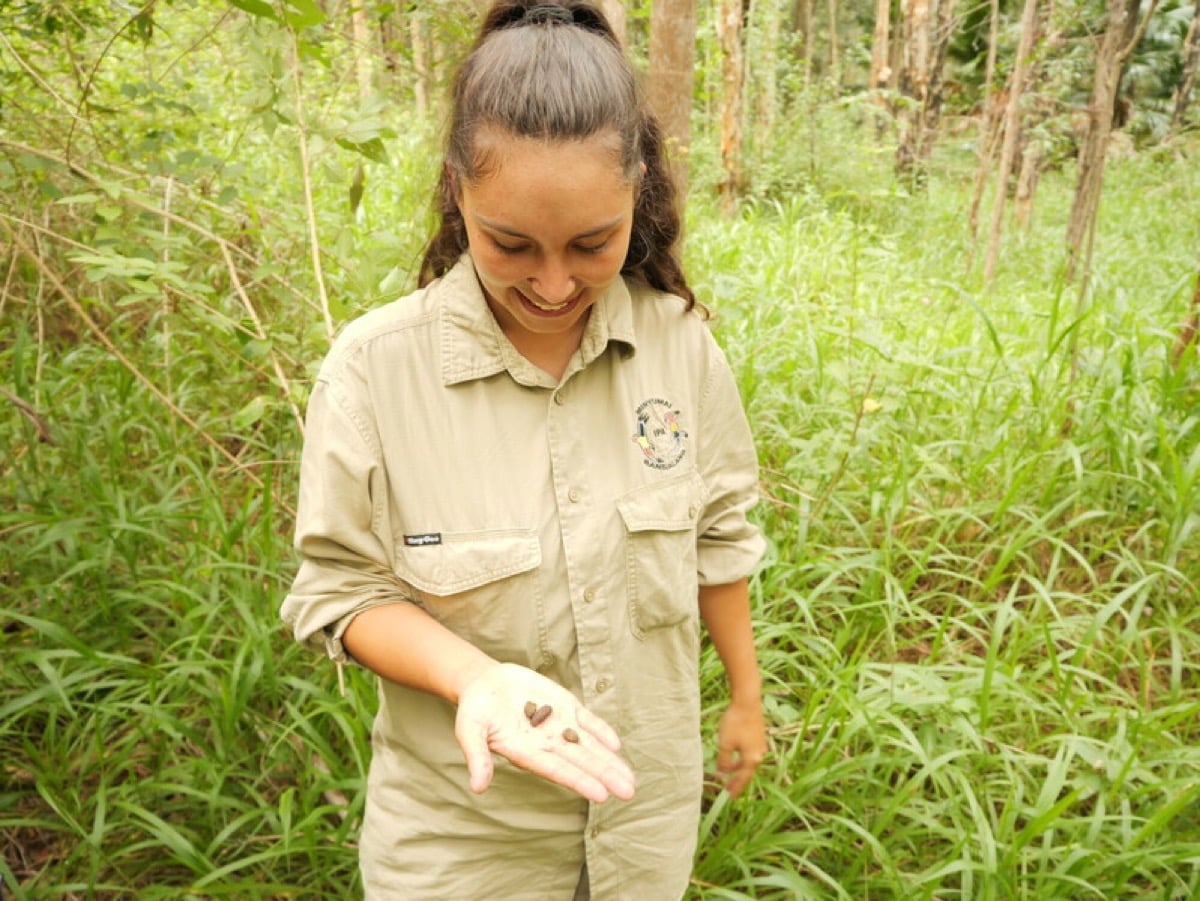
Photo supplied

‘The World Wide Fund for Nature Australia is assisting the project with funding support from furniture brand Koala.

‘So far the rangers have planted 2,500 koala food and shelter trees, mapped existing koala habitat, cleared lantana to enable Boorubee to access trees, and conducted cultural burns to reduce fuel loads to minimize wildfire risk and enable Boorubee and other species to move more easily through the landscape.

‘It feels really good doing cultural burning on our property. Having that connection to Country and doing it the way our ancestors did it,’ said Minyumai Ranger Supervisor Harry Wilson.

‘A major turning point was commissioning thermal drone surveys. Night flights located six Boorubee in 2024 and 9 in 2025. At first light, rangers went to these locations to collect koala scats and send them off for analysis.

Minyumai’s koalas are chlamydia-free

‘Those tests revealed something rare: the Minyumai koalas are chlamydia-free. Some northern NSW populations have infection levels of nearly 80%. Not only were Boorubee back on Country, but they were healthy.

‘That makes me feel warmhearted and positive about the next generation of koalas living on Minyumai. It’s amazing,’ said Maitland Wilson.

Simone Barker, a Bandjalang language teacher and cultural advisor at Minyumai summed up her hopes for Boorubee.

“Boorubee are important to all Aboriginal people. Minyumai is a sanctuary for them. It’s a place where we can keep them protected from roads, from people, from dogs. Hopefully they’ll thrive here. That’s what we want,” she said.

WWF’s Senior Manager of Koala Recovery, Tanya Pritchard, has been working with the Minyumai team.

‘Supporting Indigenous-led restoration is critical if we are to pull koalas back from the brink of extinction’.

‘The Minyumai rangers are combining Traditional Knowledge and methods such as cultural burning with technology such as drone surveys and scat analysis.

‘This innovative and holistic approach will help recover koala populations,” Ms Pritchard said.

‘While rangers jumped for joy seeing a Boorubee on their trail cameras, another image had them doing a double take – a herd of camels.

‘After an investigation it was discovered they hadn’t walked from the outback but escaped from a nearby property.  It seems there’s never a dull moment on the Minyumai IPA’.



For four decades The Echo has printed the stories some people loved, some people hated, and some pretended not to read. If you want us to keep telling the truth, the real truth, not the sugar-coated version. We’ll need your support to keep the presses rolling.

If you are a local business owner help us and in turn we help you. All The Echo asks for is advertising, not a free ride. It is every advert in The Echo and on www.echo.net.au, which creates the space for all the stories and coverage of community events, happenings and concerns.

If you are a reader you can become a sponsor of The Echo. Your support keeps the us independent.

Even a small one-off or regular donation from you will help keep the echo’s independent voice alive and strong.

Support Us

Become one of the supporters who helps keep independent, local journalism alive in the Byron Shire by contributing anything from as little as the cost of a coffee each month.

You're Wonderful, Thank you for supporting independent journalism in the Byron Shire

You’re supporting The Echo, thank you

Your contribution is keeping independent, local journalism alive in the Northern Rivers.

Because of supporters like you, we can keep every story free for everyone — no paywall, no exceptions. Your money goes directly to funding our newsroom of 40-odd local workers covering the stories that matter to this community.

Tell us what you think, give us your opinion

The Echo loves your letters and comments and is proud to provide a community forum on the issues that matter most to our readers and the people of the NSW north coast. So don’t be a passive reader, email us your epistles at editor@echo.net.au.

The letters deadline for The Echo is noon Friday. Letters longer than 200 words may be cut. The publication of letters is at the discretion of the letters editor. Please remember to include your full name, address and telephone number.

Online comments are no longer available.

Lismore Boulevard Project announced

Design concept plans for the Lismore Boulevard – Shared User Path project are now available for community consultation, following Lismore City Council securing $2,383,030 in funding through the NSW Government’s Get NSW Active 2025–2026 program, administered by Transport for NSW (TfNSW).

Community responds to detention dams proposal

More than 110 residents gathered at Rock Valley Hall on Sunday 12 July and rejected claims that the recently released CSIRO report on flood mitigation was informed by strong community consultation.

Data shows biggest danger to wildlife is people, not cats

Human-created hazards are responsible for most wildlife rescues in New South Wales, and researchers are calling for more prevention strategies to save threatened species.

Try pickleball and support a great cause

Northern Rivers Pickleball Club are holding a marathon day of pickleball on Sunday, 19 July at the Goonellabah Tennis and Pickleball Club on Reserve Street, Goonellabah.

