


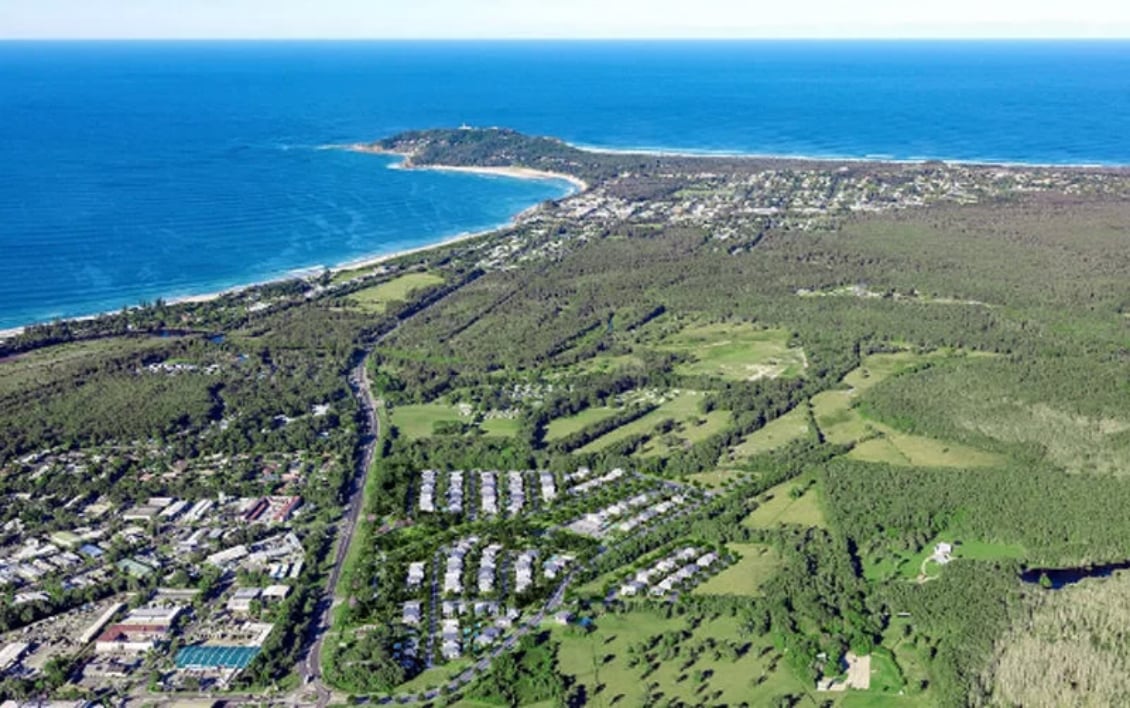
Byron Council has moved to impose the maximum developer contributions currently allowed under NSW planning rules, backing a draft infrastructure funding plan that could see new housing developments charged up to $20,000 per dwelling.
Councillors voted unanimously at their 30 April meeting to back the draft Byron Shire Local Infrastructure Contributions Plan 2026, which Council says is needed to maximise funding for roads, parks, transport projects, and community infrastructure required to support future growth.
Council’s own report states the proposed single, shire-wide catchment model ‘provides the maximum revenue possible for Byron Shire as a whole’.
Under the draft plan, contributions for new three-bedroom homes would total $22,479 per dwelling. Non-residential developments over $200,000 would attract a levy of one per cent of development cost.
The proposed plan would replace Byron Shire’s existing seven-catchment model with a single Shire-wide system, meaning developer levies collected in one part of the Shire could potentially help fund infrastructure projects elsewhere.
Byron’s Deputy Mayor, Jack Dods, described the draft plan as ‘a really important document’, saying it represented a major improvement on the previous contributions framework.
‘It’s really critical in ensuring that Council is collecting the necessary contributions to keep public infrastructure in line with growing communities,’ Cr Dods said.
He argued Byron Shire’s soaring property prices justified Council taking a strong approach to developer levies.
‘The cost of real estate in this town is phenomenal, and therefore I think it’s very reasonable and there should be a strong onus on Council to try and collect as much money, and raise as much revenue from those developer contributions as possible,’ he said.
Future growth
Council argues the overhaul is also necessary because of the projected growth in the region and the associated infrastructure demands.
The draft strategy forecasts more than 4,200 additional dwellings and major population growth over the next 15 years, placing additional pressure on transport networks, open space, water supplies, and community facilities.
More than $175 million worth of projects have been identified in the draft works schedule, including the Byron Bay Foreshore Upgrade, a proposed Shire-wide library, upgrades to key intersections in Suffolk Park, Ewingsdale, and Mullumbimby, the Mullumbimby to Brunswick Heads cycleway, and improvements to 27 bus stops.
Cr Dods highlighted a series of projects, including the proposed Burringbar Street footbridge in Mullumbimby, upgrades to the Byron Bay pool precinct, Federal village main street improvements, another master plan for Tweed Street in Brunswick Heads, and shared path connections linking Bayside Brunswick Heads to the town centre.
‘These aren’t insignificant budget items,’ he said. ‘They’re in many cases hundreds of thousands, and often millions, of dollars that we’re going to collect from developers to put towards these really critical and really important visionary projects.’
Public exhibition
Before the formal exhibition period, Council undertook an extensive consultation process that included workshops across the Shire, online engagement, meetings with special interest groups, and sessions with local high school students.
According to the engagement report, there was ‘broad support’ for the proposed one Shire-wide catchment model and general agreement that residential developments should pay Section 7.11 contributions while non-residential developments contribute through Section 7.12 levies.
Community feedback highlighted priorities including pedestrian safety improvements, footpaths and shared paths, beach access upgrades, park improvements, and upgrades to intersections in Ewingsdale, Suffolk Park, and Mullumbimby.
The question of whether higher developer contributions ultimately flow through to homebuyers is likely to become a key issue during the next public exhibition period.
While councils argue the charges are necessary to ensure growth pays for growth, the development industry has frequently argued that rising infrastructure levies contribute to increasing housing costs and can make some projects less financially viable.
The draft plan will now go on public exhibition (www.byron.nsw.gov.au/) or at least 28 days, with submissions to be reviewed before the matter returns to Council for possible adoption in June ahead of a proposed 1 July commencement date.
 For four decades The Echo has printed the stories some people loved, some people hated, and some pretended not to read. If you want us to keep telling the truth, the real truth, not the sugar-coated version. We’ll need your support to keep the presses rolling.


