


Brought to you by The Echo and Cosmos Magazine
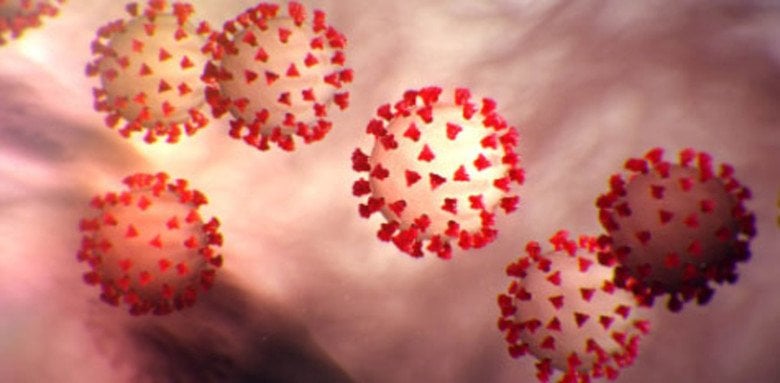
Lost to learn about the dominant variant
The Delta variant of COVID-19 is now the dominant strain of the disease worldwide, and it has caused lockdowns in every mainland state and territory in Australia.
There’s still plenty to learn about Delta, but research is starting to trickle in, showing that in some ways it’s similar to the original (‘wild-type’) strain of SARS-CoV-2 that first emerged in 2019 – after all, it’s still SARS-CoV-2 – but in other ways it’s different. So, what do we know about the Delta variant?
How long have we known about Delta?
The Delta variant was first documented in India in October 2020. The World Health Organization didn’t list it as a ‘variant of interest’ (VOI) until 4 April 2021, and it wasn’t considered a ‘variant of concern’ (VOC) until 11 May 2021. (The definitions of VOIs and VOCs are detailed, but in short, a VOI is a widespread variant with genetic changes that may make it more virulent, and a VOC is a variant of interest that’s been shown to be more infectious or virulent.)
So the vast majority of scientific research that focusses on Delta has only been going for a maximum four months. Consider what we knew, and didn’t know, about COVID-19 in May 2020, four months after it had been announced to the world.
Do vaccines work as effectively on Delta?
Preliminary data, such as this report on the Pfizer and AstraZeneca vaccines, shows that vaccines are still effective against the Delta variant. It’s difficult to compare efficacy between vaccines and variants, because every trial handles data and participants differently, but there is some evidence that the vaccines don’t work as well against Delta as they did against wild-type COVID, particularly if the person is only partially vaccinated.
As with wild-type COVID-19, vaccines are not 100% effective against Delta – there are confirmed reports of fully vaccinated people contracting and transmitting it. But vaccination still makes you much less likely to contract Delta, and even if you do, vaccines make you much less likely to experience symptoms.
Do masks work as effectively on Delta?
There isn’t yet much data on mask efficacy against Delta specifically – as with wild-type COVID, this is a difficult thing about which to gather data because there’s so much variation across regions, types of mask and mask use. But masks are likely to help slow the spread of Delta, and they certainly can’t hurt.
In the US, the Centers for Disease Control and Prevention is recommending indoor mask usage among fully vaccinated people to reduce the spread of Delta. This represents a change in its policy – previously, fully vaccinated people weren’t thought to need masks.
Are children affected similarly by Delta?
There have been reports around the world of upticks in COVID outbreaks in schools, thanks to the Delta variant. But it should be noted that adult populations are increasingly becoming more vaccinated, while vaccines are still mostly not approved for children. Vaccine trials on children are starting to gather data – Moderna, which has recently been approved in Australia, has just ruled out Australian trials but is planning to test its vaccine in children as young as six months. The Pfizer vaccine has been approved for ages 12 and over in Australia.
Children and young people still mostly experience a very mild illness when they contract the Delta strain of COVID-19.
Are the symptoms the same as wild-type COVID-19?
There are some different symptoms associated with Delta. Headaches, persistent coughs, sore throats, runny noses, fevers and high temperatures are more common with Delta. Fever and loss of taste and smell were the most common symptoms associated with wild-type COVID.
As with wild-type COVID, symptoms can be very mild or very severe, so it’s important to get a test whenever you’re unsure.
There’s some evidence that Delta is more deadly, but more data is needed before we know for sure.
How infectious is it?
The Delta variant is more than twice as infectious as previous strains of SARS-CoV-2. There has been transmission of the virus during much shorter periods of contact than had been previously recorded.
It’s believed that the reason for Delta’s infectiousness is because it replicates more in the human body, creating a higher viral load.
Originally published by Cosmos as The worst variant yet? Everything you need to know about Delta
Ellen Phiddian
Ellen Phiddian is a science journalist at Cosmos. She has a BSc (Honours) in chemistry and science communication, and an MSc in science communication, both from the Australian National University.
Recent stories, information and updates regarding COVID-19
New data from the Australian Bureau of Statistics Life shows life expectancy in Australia has decreased slightly for the second year in a row. An international team of researchers has found more evidence that COVID-19 came from animals in a Wuhan food market. The lab-leak theory that Covid-19 came from the Wuhan Institute of Virology – instead of a nearby wet market – was thrashed about in public recently, with the US Senate Homeland Security Committee holding a hearing into Covid-19. Eighteen schools in the Northern Rivers division of Richmond have received $25,000 each as part of the federal government’s School Upgrade Fund, Labor Member for Richmond Justine Elliot said last week. COVID-19 reversed earlier trends toward longer life expectancies. During the pandemic, life expectancies globally dropped by 1.6 years according to a new study published in the Lancet medical journal. Let’s not forget that Covid-19 is still a big issue in our community with 31,935 cases reported across Australia in the last week – an average of 4,562 cases per day. The Global Carbon Budget is about to be refreshed, giving the world a critical insight into how efforts to reduce greenhouse gas emissions are (or are not) progressing. Masks will no longer be mandatory on public transport from tomorrow, Wednesday 21 September. SW Police are urging festival-goers at this weekend’s music festival to celebrate in a safe and responsible manner, whilst also being aware of COVID-Safety measures. The Northern NSW Local Health District reports that to 4pm yesterday, Sunday May 22, there were 40 COVID-19 positive patients in hospital in Northern NSW, with one of these in ICU.
COVID-19 reduces Australian life expectancy
Wuhan market increasingly likely origin point for COVID-19

Editorial – There’s a bat in my lab!

Fresh air federal funds for Northern Rivers schools in need

COVID-19 pandemic has cut life expectancy globally
COVID-19 update for New South Wales
Five graphs you need to see before the Global Carbon Budget...

Public transport mask mandate to end

NSW Police: be COVID-vigilant at Splendour in the Grass

COVID-19 update for the NNSWLHD – May 23
 For four decades The Echo has printed the stories some people loved, some people hated, and some pretended not to read. If you want us to keep telling the truth, the real truth, not the sugar-coated version. We’ll need your support to keep the presses rolling.


