


A drug and alcohol expert who is a keynote panelist at tomorrow’s community forum on ice in Byron Bay says stigmatising users of the drug ice is counterproductive to users seeking help.
And it has now tragically led to the death of a young man from Byron shire.
Echonetdaily can reveal this stigmatisation had catatastrophic consequences in the death of the 24-year-old man while being treated in hospital after a car accident.
A report from an independent hospital investigation into his preventable death highlighted a series of blunders and neglect by staff misdiagnosing symptoms of the young father, who had voluntarily admitted use of ice prior to the single-vehicle accident in which he’d fallen asleep.
The Newcastle Coroner is considering an inquest into the cause of his sudden death in hospital.
The young man, who had suffered limb, neck and other injuries, had been placed under special ‘code black’ supervision at the hospital, apparently when they misdiagnosed delirium (from infection) as drug-induced behaviour.
The manner in which the young man died in hospital from a non-life-threatening injury, alone and in pain, has shocked his family who had talked to him the previous night by phone at his hospital bed and were planning to visit him the next day.
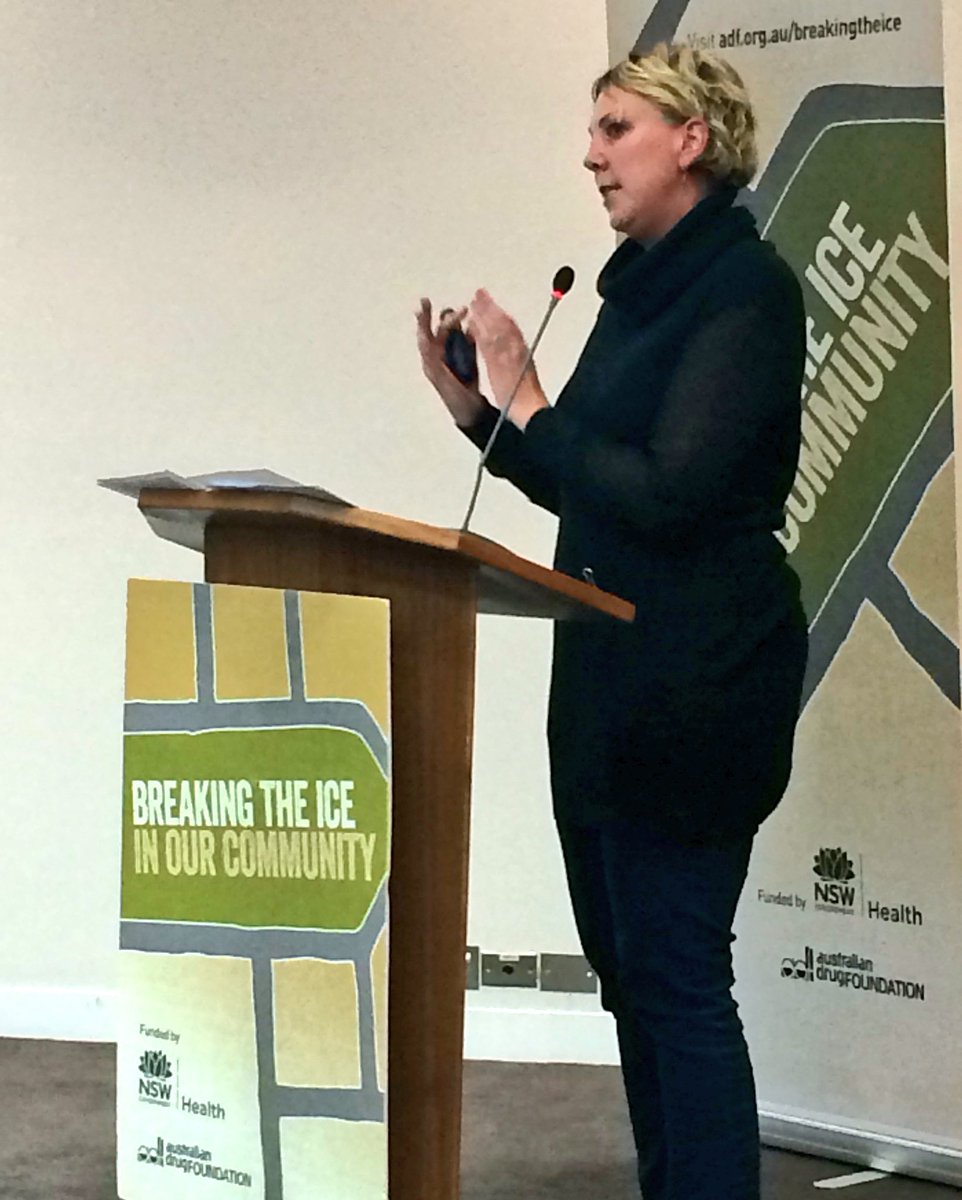
The expert at tomorrow’s Byron forum, Annie Bleeker, the national program manager for the Alcohol and Drug Foundation (ADF), says the language used in the media creates a culture of ‘fear’ around the drug and its users, which in turn affects how the community can properly and successfully deal with the issue
She says this fear around the drug and its users ‘in turn is counterproductive to users seeking help and the community having any impact on drug usage and its impacts’.
‘Its around stigma’, Ms Bleeker says of the media’s choice of language use around the drug, ‘words like epidemic are used for diseases that are out of control’.
‘The only thing we actually have an epidemic of is headlice! she said.
Clinical service manager for Ted Noffs, Kieran Palmer, is also on the panel and he shares the view of Ms Bleeker.
‘We hear words like scourge and epidemic and it evokes thoughts in our heads, like its everywhere, like you are going to be addicted as soon as you touch it,’ Mr Palemr said.
Wasted campaigns
‘But the reality of that is far from that. We end up terrifying the population who weren’t going to use it anyway and there is plenty of evidence to show these campaigns don’t work’, he said.
‘And its not just the media. government campaigns don’t help much either.
‘In looking at those ads (reminiscent of the early AIDS Grim Reaper) if was an Ice user looking at those ads, I’d see that as how society sees me so why would I step forward and seek help?’
Ms Bleeker’s data concurs: stigma stops people accessing treatment.
‘It takes five to ten 10 years for users to access treatment. That is a long time and we know that the sooner someone accesses treatment, the better their outcomes,’ she said.
‘Stigmatising ice users just means they are less likely to seek help and consequently this impacts on their treatment outcomes.
Contrary to the media campaigns on the dangers and impacts of ice, Mr Palmer says ‘the vast majority of people who try it don’t develop full on dependencies.’
He does not suggest that ice is harmless, rather that the dependency and use story shown in the statistics is quite different to the story told in the media.
Ms Bleeker said that ‘while we are currently working on data from 2013, it is evident that only two per cent of the population used the drug last year.
‘Seventy per cent of users are using it less than monthly and of that group 30 per cent reported to using it weekly or monthly and 10 per cent are using it more regularly.
‘And one in 4 people who end up becoming drug dependent have a psychotic episode. It is the psychotic episodes that have caught the imagination of the media.
‘The drug has a unique way in which it affects brain chemicals.
‘When you take crystalline methamphetamine you get 500 to 1,200 per cent more dopamine (this gives immense pleasure).
‘People got right up, that is what is so attractive about the drug. If you have a shit life than that is what is so attractive.
‘About 12 to 24 hours later the user will crash. They go minus 500 to 1,200 per cent in their dopamine baseline.
‘That’s when the bizarre behaviour can happen. They sense danger that’s not there. That flight or fight response kicks in, it can make people strong or aggressive. You can’t rationalise with someone in psychosis,’ Ms Bleeker said.
This is where Frontline services need specific training and strategies on how to manage crisis.
One key area being discussed at the forum is treatment options.
‘There seems to be a belief that you need rehab for ice, but there is strong research that says two to four counselling sessions helps decrease a persons use of the drug,’ says Ms Bleeker.
‘Not everyone can take 12 months out of their lives, in the end its about using whatever way works to get off drugs’
‘To date, attitudes around Ice and drug use have always polarised the community into an “us” and “them” mindset. Meaning that the drug problems are seen as a problem specific to the drug using community.
‘The aim of forums like Breaking the Ice is to smash this myth as well and remind communities that any solution is always a whole community solution.
‘Its about running more activities, particularly with youth who are disengaged. We don’t have exact data on what is happening in rural areas but people in regional areas are twice as likely to use.
‘We also have higher use levels in LGBTI communities. If you feel disengaged from your community you are more likely to use.’
The key clearly, is community engagement.
‘That’s why the central message is see the person, not the drug’ says Ms Bleeker.
‘One of the good things we have done with this project is change the discourse away from the scary drug to the person. The Person needs support and help and connection back into the community. They don’t need to be pushed out.’
‘We need to fight fear with facts’.
The ‘Breaking the ICE Byron Community Forum, is being hosted by the BUDDI Community Drug Action Team, and will be held at the Byron Services Club tomorrow (Thursday, 13 October) from 5.30pm-9pm.
 For four decades The Echo has printed the stories some people loved, some people hated, and some pretended not to read. If you want us to keep telling the truth, the real truth, not the sugar-coated version. We’ll need your support to keep the presses rolling.


