

18.1 C
Byron Shire
June 4, 2026

‘Technically no longer human’ – can mRNA COVID-19 vaccines meld with your DNA?

Latest News

Local family-owned Byron businesses asking for your support

Long-term, local Byron businesses are calling on the community for support as they struggle to remain afloat as the drainage works in Byron Bay continue.

Other News

The Greens’ 3-way comp: Ballina Councillor vs Byron candidates for state preselection

Byron Greens members could expect to be asked to take the future of the Richmond River further south into account when choosing a candidate for next year’s state election.

Drug driving reform introduced to NSW Parliament

Greens MP and drug harm reduction spokesperson Cate Faehrmann has welcomed news that reform to drug driving laws for medicinal cannabis patients will finally be introduced into NSW Parliament.

Israel’s rehabilitation

Israel’s genocide of the Palestinians has not ended and it will not end before Israel officially renounces its intention...

Potholes 

As a relatively regular visitor to this area I was astounded, on trips to Byron Bay, at the number...

Lismore Lantern Parade returns 20 June

The iconic Lismore Lantern Parade will once again light up the streets of Lismore on Saturday 20 June, kicking off with a full day of markets, live music and exciting activities.

Drugs: a health problem needing law reform

The 2024 Penington Institute’s Annual Overdose Report stated that, ‘in 2022 there were 2,356 drug-induced deaths in Australia, equating to approximately six lives needlessly lost each day’.

Brought to you by The Echo and Cosmos Magazine
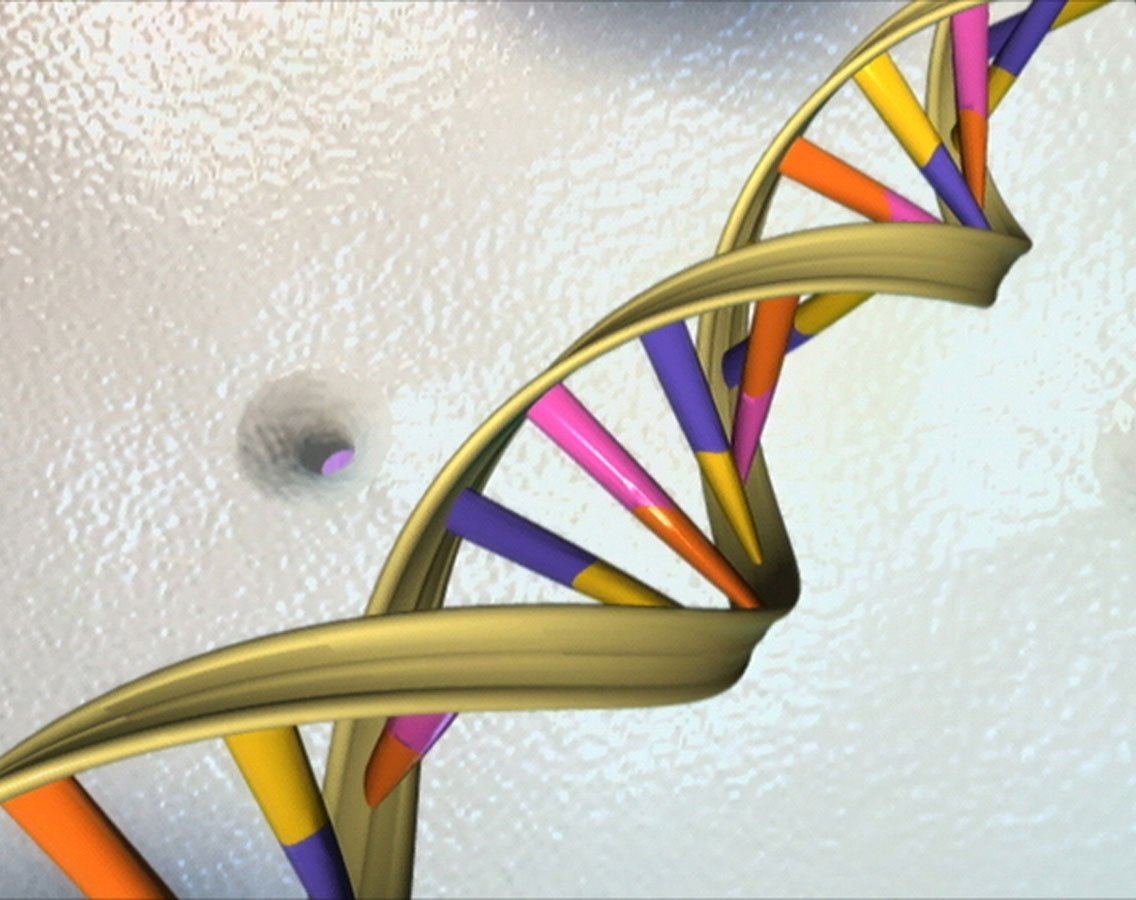

Can the mRNA in a COVID-19 vaccine alter your DNA? Experts weigh in. Image National Genome Health Research Institute

Indeed, can your DNA be altered at all?

It’s becoming increasingly common to see social media posts claiming that the mRNA COVID-19 vaccines, which include those made by Pfizer and Moderna, could alter a person’s DNA.

Is there any truth to these rumours? Could an mRNA vaccine be modifying your DNA?

mRNA vaccines are made from synthetically designed genetic ‘photocopies’ of DNA known as messenger RNA (mRNA). Our cells use mRNA as the recipe for building proteins. The Pfizer and Moderna vaccines contain the mRNA for the COVID-19 spike protein, which is fed to our cells so that they can identify and attack COVID-19 if it enters the body.
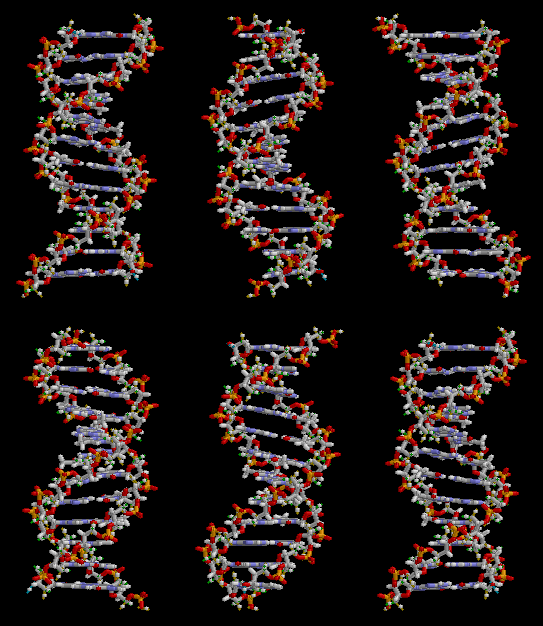
DNA structure. Image Wikimedia Commons

So why might people be concerned that this mRNA could somehow alter our DNA?

In an AusSMC Expert Reaction, Professor Nigel McMillan from Griffith University suggests that the process of RNA being inserted into human DNA does happen in the case of some other viruses.

‘We know that certain viruses such as HIV are able to insert their RNA into the human genome, but only after they have converted it into DNA,’ he says. ‘This is accomplished via a virus enzyme called reverse transcriptase – an enzyme humans don’t have.’”

In other words, without the existence of the enzyme, there’s no way for a similar thing to happen with the COVID-19 vaccine. “The upshot is we don’t have a way for mRNA vaccines to be inserted into our genomes, so, current vaccines are safe,” McMillan says.

Professor Thomas Preiss from the Australian National University is also confident that the COVID-19 vaccine couldn’t end up spliced into the human genome.

‘There is, at present, no evidence that it’s plausible for mRNA from the COVID-19 vaccines to be integrated into human DNA,’ he says, ‘at least not in the sense that it would represent a significant medical problem with mRNA vaccines.’

Preiss adds that, even if by some rare chance a fragment of the mRNA vaccine was able to splice itself into human DNA, it would most likely not be much of a problem anyway.

‘Even if such events did rarely occur, the chances of it having a detrimental effect on the individual are extremely low,” he says. “Thus, this issue will likely be of negligible consequence to human health, whether on the individual or population level, especially in contrast to the very real harm done by the global pandemic.’

Darkly doom-like DNA. Image Wikimedia Commons

McMillan and Preiss both referenced a controversial paper published in the Proceedings of the National Academy of Science (PNAS) claiming that it was possible for COVID-19 mRNA to be implanted in human DNA. However, neither expert felt the paper stood up to rigorous scientific scrutiny.

‘The scientific consensus is that this work is preliminary, not proven, and likely an artefact of the experimental process rather than a real finding,’ says McMillan.

Preiss references two more papers, one from the American Society for Microbiology and the other a non-peer reviewed pre-print, which independently test the findings of the PNAS paper.

‘There have now been at least two studies presenting evidence that the very detection technology used could be to blame for the generation of hybrid human-viral sequences during the analysis, rather than events that had occurred in the cells,’ he says.

And what about the implication that nano-machines are included in mRNA vaccines to artificially alter human DNA? Preiss says it’s all to do with a misunderstanding of the terms used to describe the size of tiny molecules included in the vaccines.

‘The origin of this concern, as circulating on social media, seems to have been in part a broader suspicion against nanotechnology,’ he says. ‘However, in the mRNA vaccine context, the term ‘nano’ simply refers to the tiny size of fat-like droplets that the mRNA is encapsulated in for delivery into cells.’

This article originally appeared in Cosmos Magazine and is reproduced with their permission.


For four decades The Echo has printed the stories some people loved, some people hated, and some pretended not to read. If you want us to keep telling the truth, the real truth, not the sugar-coated version. We’ll need your support to keep the presses rolling.

If you are a local business owner help us and in turn we help you. All The Echo asks for is advertising, not a free ride. It is every advert in The Echo and on www.echo.net.au, which creates the space for all the stories and coverage of community events, happenings and concerns.

If you are a reader you can become a sponsor of The Echo. Your support keeps the us independent.

Even a small one-off or regular donation from you will help keep the echo’s independent voice alive and strong.

Support Us

Become one of the supporters who helps keep independent, local journalism alive in the Byron Shire by contributing anything from as little as the cost of a coffee each month.

You're Wonderful, Thank you for supporting independent journalism in the Byron Shire

You’re supporting The Echo, thank you

Your contribution is keeping independent, local journalism alive in the Northern Rivers.

Because of supporters like you, we can keep every story free for everyone — no paywall, no exceptions. Your money goes directly to funding our newsroom of 40-odd local workers covering the stories that matter to this community.

Tell us what you think, give us your opinion

The Echo loves your letters and comments and is proud to provide a community forum on the issues that matter most to our readers and the people of the NSW north coast. So don’t be a passive reader, email us your epistles at editor@echo.net.au.

The letters deadline for The Echo is noon Friday. Letters longer than 200 words may be cut. The publication of letters is at the discretion of the letters editor. Please remember to include your full name, address and telephone number.

Online comments are no longer available.

Bay FM’s Karena Wynn-Moylan wins at Aus Audio Awards

Australia’s top radio and podcast talent were crowned at the inaugural Australian Audio Awards last Thursday night at Carriageworks in Sydney. Entries were judged on their technical expertise, audio quality, content and impact.

Drugs: a health problem needing law reform

The 2024 Penington Institute’s Annual Overdose Report stated that, ‘in 2022 there were 2,356 drug-induced deaths in Australia, equating to approximately six lives needlessly lost each day’.

Northern Rivers philanthropic org reveals 2025 achievements

Not-for-profit philanthropic organisation, Northern Rivers Community Foundation (NRCF), have released their annual report for 2025, revealing $2.4m was raised which provided to 121 projects across the region.

Kayakers rescued after being stranded on offshore rock near Byron Bay

Volunteers from Marine Rescue Brunswick battled darkness and deteriorating conditions overnight to save three men stranded on Cocked Hat Rock, part of the Three Sisters south of Byron Bay.

