


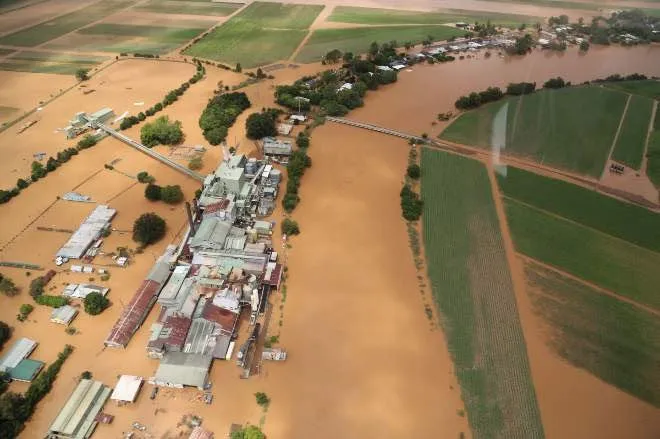
As Tweed Shire Council prepares to take on 2023, they have taken stock of the year that was dominated by the flood of February 2022 – the biggest flood in the Tweed’s recorded history which devastated much of the region.
The destruction and damage to the Tweed’s infrastructure, services, businesses and individuals caused widespread angst and distress and the financial cost amounts to many millions of dollars.
Getting the Tweed up and running again has been a focus for Council and the many organisations involved in recovery efforts. Actions have ranged from temporary fixes, to full reconstruction of damaged infrastructure and supporting those in the community still impacted by the flood.
Restoration of infrastructure and services
Restoration works commenced in March and will continue through 2023 and well into 2024.
Supporting the Tweed’s recovery by reconnecting communities and restoring infrastructure and assets has been a priority for Council.
The challenge has been not just to restore infrastructure but where feasible, incorporate greater resilience.
Mayor of Tweed Shire Chris Cherry, said it was essential Council works with other agencies and organisations to prepare for, mitigate and build resilience to both natural disasters and climate change.
‘Being able to provide the community with reliable essential services and infrastructure is a key part of Council’s strategic plan,’ said Cr Cherry.
‘The total damage bill from the floods of February and March for Council has been revised up and is now estimated at more than $110 million.’
Cr Cherry said she was extremely proud of the Tweed community and the unity shown in times of disaster. ‘I’m always really impressed by the incredible spirit of the Tweed community and the efforts undertaken to help others in their time of need and this was no exception.
‘We still have a lot of work to do in this rebuilding phase, but I would like to applaud the efforts of our community and our Council staff in being able to achieve so much this year.
‘Our efforts now will help us plan better to make sure we are ready for any future events given the anticipated impact of climate change.’
Damage to the road network
A large portion of the cost has been damage to the road network, including 10 significant landslips which have caused major disruptions to the community.
Restoring the road network has been a complicated and lengthy process with an estimated road damage bill of more than $90 million.
To date, a total of 3,780 road damages have been identified which is more than double that following the 2017 ex-Cyclone Debbie floods and does not include minor repairs such as potholes.
As at the end of November, Council has spent more than $39 million on flood restoration works. The bulk of this expenditure is in road repairs including:
- Council has completed 100 per cent of the Emergency Works – 730
- Council has completed 76 per cent of Immediate Reconstruction Work – 1,601 out of 2,104 locations
- Council has repaired 36,242 potholes.
Cleaning up the mess
The flood recovery has included a massive clean-up operation, removing flood debris and commercial and residential items destroyed or damaged in the floods.
The cost of the waste collection and disposal was $4.1million.
- This involved clearing 26,000 tonnes of flood waste including household goods (equivalent to an additional 2/3 of the annual waste volume the community usually produces)
- Among this waste was 1,440 tonnes of asbestos
- An estimated 75,000 tonnes of mud debris were also collected and removed (including setting up a temporary waste processing facility with approvals from the Environmental Protection Authority).’
Damage to Council buildings
Some 90 Council buildings were damaged in the floods along with damage to items such as water and sewerage, flood mitigation and waterway assets.
The estimated cost to restore these facilities is in the order of $20 million. To date more than $2.15 million worth of repairs have been carried out including:
- Repairs to community assets and parks – $850,000
- Council depot repairs – $600,000
- Water and wastewater repairs – $700,000
- Flood mitigation assets – $300,000.
Support the community recovery
The disaster didn’t just place huge cost on Council, the community was also hit hard by the 2022 floods. More than 2,100 homes were damaged and of those, 500 were deemed no longer habitable and an estimated 1,600 people required temporary accommodation.
An extensive support network was established to provide support to those impacted by the floods.
In addition to this, Council also provided $250,000 in support for recovery services.
During this time, Council launched the Mayoral Flood Appeal which raised $80,230 which was distributed to various organisations including the Murwillumbah Community Centre, local SES units, the Northern Rivers Community Foundation, the Family Centre and to isolated Tweed communities for communications equipment.
The demand for support services at the Murwillumbah Community Centre (MCC), which was damaged by floodwaters, increased dramatically. Forced to relocate to Council-provided facilities at the Coolamon Centre, the MCC team was kept busy, particularly in the early months after the floods.
The number of people accessing MCC support services from March to June 2022:
- emergency relief increased 15.4 times compared to those seeking assistance in 2021, with 924 people (# occasion of services) seeking support for themselves and their families
- general information, advice, and welfare support increased by 268% with a total of 1,928 people assisted
- financial counselling tripled with a total of 59 people serviced since March.
The Chinderah Donation Hub was established in March to assist flood-impacted residents, especially those living in caravan parks in the local area.
Since March, the Hub has assisted more than 3,500 people through to December.
With the support of the Australian Red Cross, the floods also saw the establishment of 19 Community Resilience Teams (CRT) in the Tweed, covering 43 at-risk communities. The Pottsville CRT topped the count in terms of assistance, dealing with approximately 6,000 people since the flood.
Council also invited businesses to submit self-assessments of the impact of the floods in March. From those assessments, it was estimated the cost to the local economy was, at the time, around $58 million but since then, that figure is estimated to be much higher.
In the wake of these devastating floods, the Tweed community has shown great resolve and compassion for each other, coming together to recover and rebuild.
To follow what Council and these amazing organisations within our community have been doing in terms of flood recovery, visit tweed.nsw.gov.au/flood-
 For four decades The Echo has printed the stories some people loved, some people hated, and some pretended not to read. If you want us to keep telling the truth, the real truth, not the sugar-coated version. We’ll need your support to keep the presses rolling.