


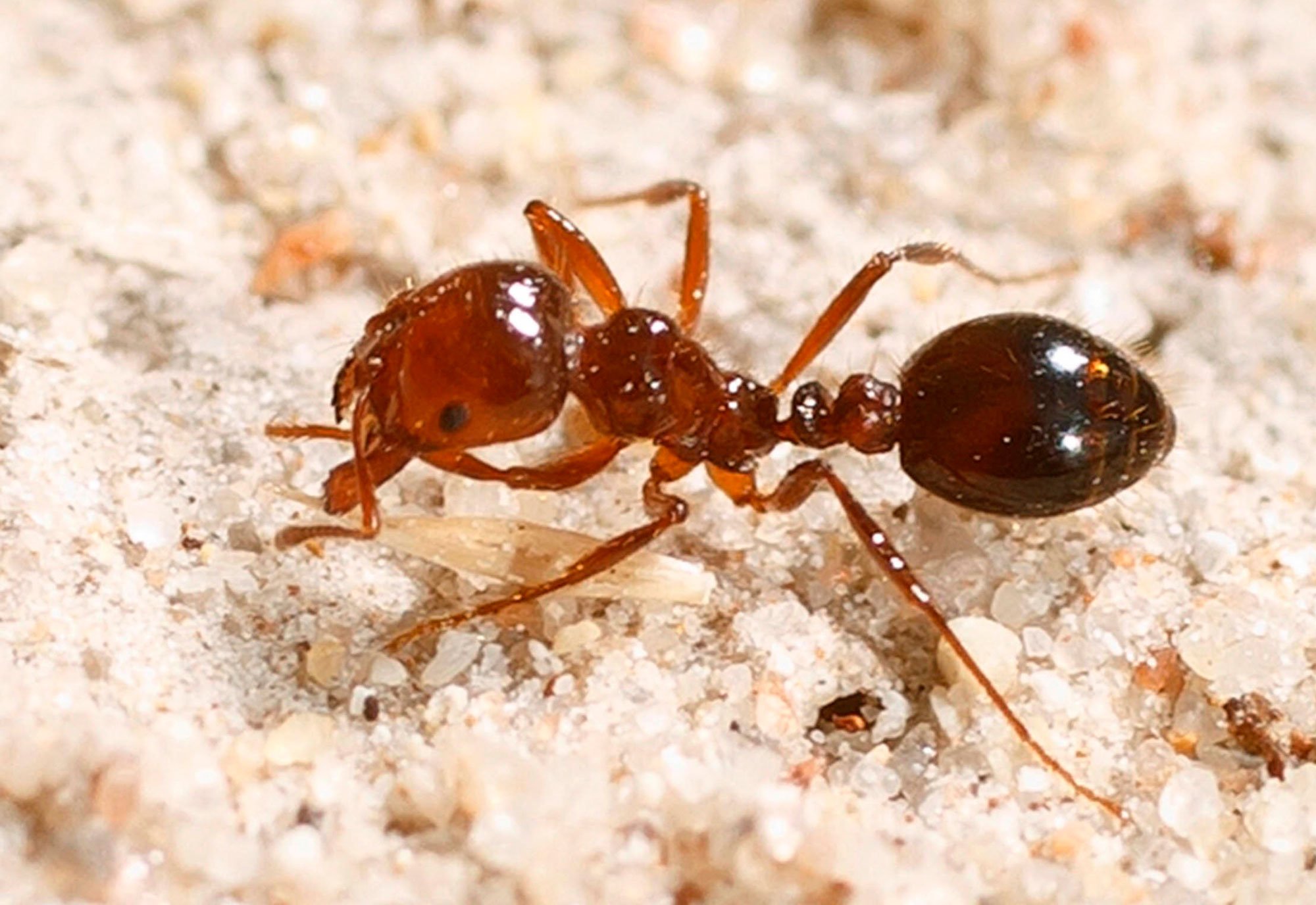
An entomology professor says authorities are likely to eradicate a Red Imported Fire Ant outbreak in the Tweed Shire but the invasive species will reach the Northern Rivers again.
Authorities including the New South Wale Department of Primary Industries and a dedicated Fire Ant Eradication Program team have set up a biosecurity zone in South Murwillumbah and have been baiting the queen ants as well as sweeping the area with sniffer dogs and drones.
No more nests have been found since the first five discovered eleven days ago.
But Southern Cross University Professor Nigel Andrew says unlike the thousand or so native Australian species of ant, the Fire Ants from Southern America are able to breed at any time of year, so long as their nests are big enough.
‘They’re so successful because they can actually produce their winged queens multiple times of the year,’ Professor Andrew says.
‘The queen ants are winged and they can fly up to 30 kilometres,’ he says,’if a southerly comes through, they can actually move quite a long distance’.
Travelling ants unlikely to have energy for a colony

The professor says there’s potential for the fire ants to move from south-east Queensland down to Melbourne ‘within a couple of days’.
Once a fire ant colony is big enough, Professor Andrew says they become ‘super colonies’ where the queen ant, ensconced in the nest and having only produced infertile workers initially, will start to produce winged and fertile ‘princes’ and ‘princesses’ as well as workers.
It’s the princes and princesses who will leave the nests as part of their ‘nuptial flights’, that is, to breed and set up their own nests, although only princesses have a chance of surviving the full experience to become queens.
Last week The Echo heard while there have been recordings of queens moving up to 30km on high winds, 99.9 per cent of queens don’t get past the 2km mark.
National Fire Ant Eradication Program Head of Operations Graeme Dudgeon said it wasn’t just about how far the ants could get since even if ants survived a flight that far they were ‘unlikely to have the energy to set up a colony’.
The best way to kill off the ants’ nests is a bait that renders the queen infertile, Professor Andrew says, but the baiting must happen a few times to stop the queen from producing.
Billions of dollars, farming and wildlife at stake
Professor Andrew has used what he says is a rare opportunity of speaking to media to criticise government responses to the spread of fire ants into south-east Queensland around two decades ago, although he says the response over the border in the Tweed Shire has been swift.
‘We’ve had nine incursions of fire ants into Australia,’ Professor Andrew says, ‘all of them but the current one in southeast Queensland has been eradicated’.
Professor Andrew says there wasn’t a concerted effort to eradicate the outbreak, which has since expanded to an area of around 600,000 hectares north of the NSW/QLD border.
‘There wasn’t enough money and resources put in and it wasn’t coordinated,’ he says.
‘The costs, if we let it go on for any longer, get massive,’ he says, ‘they go from the hundreds of millions into the billions of dollars’.
‘They will completely overrun agricultural spaces, they can kill livestock, they’ll feed on crops as well,’ he says.
Fire ants can also ‘eradicate or remove’ native species, the professor says.
Responding to outbreaks early, as has happened in South Murwillumbah, is essential, he says.
Federal and state biosecurity authorities ‘have actually got a really well- coordinated effort to actually identify if a fire ant is in an area’, Professor Andrew says.
‘There’s only five or so nests that have been identified,’ he says, ‘and there’s actually a thorough sweep going on’.
‘But what we can predict is there will be more incursions, it will happen again and again because we know there are fire ants in southeast Queensland’, he says.
Tiny creatures capable of ‘great harm’
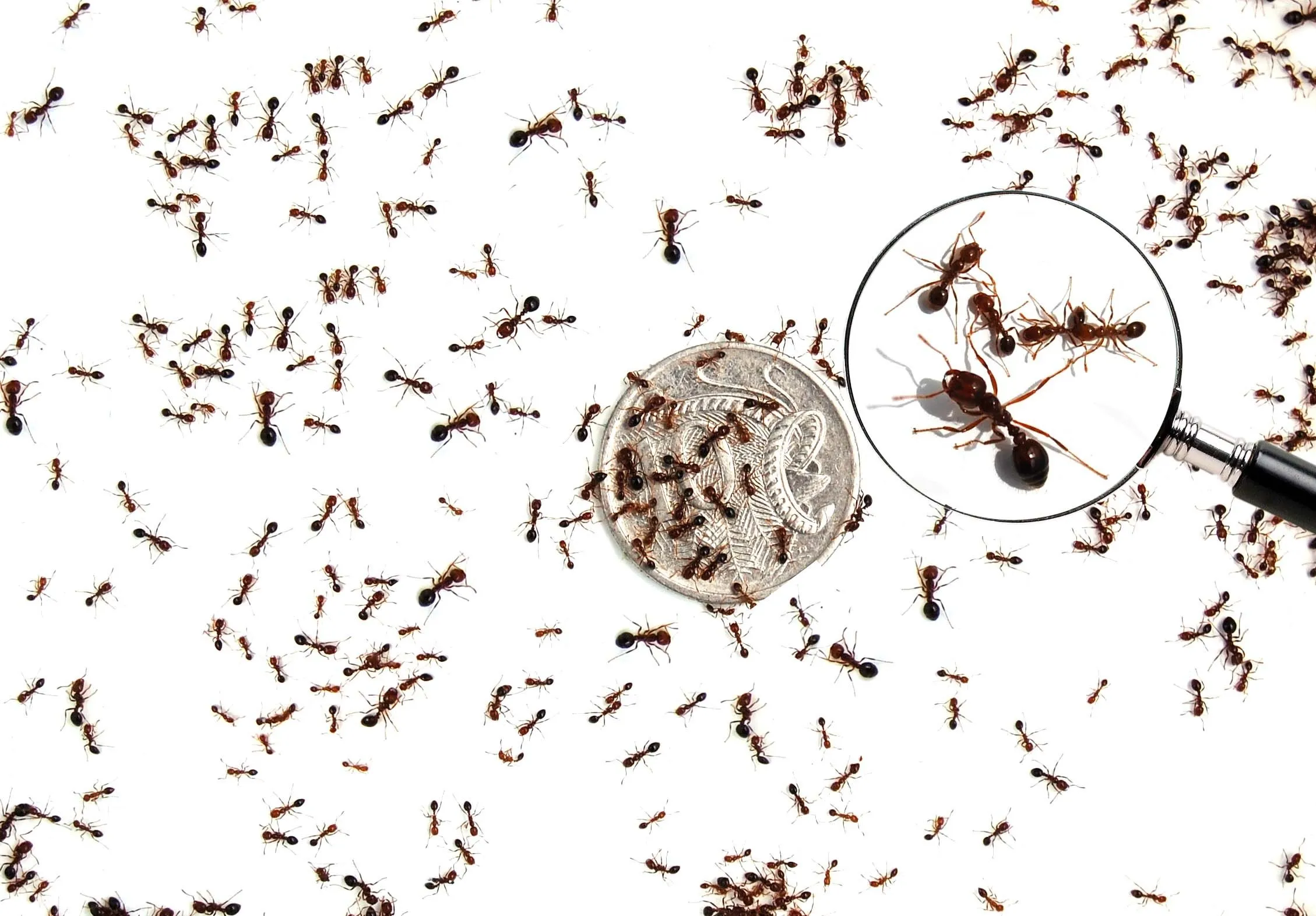
Red Imported Fire Ants are two to six millimetres long, smaller than the length of most adult pinkie fingernails.
They’re dark reddish-brown in colour with a darker abdomen of brown-black.
The DPI says the ants have a sting capable of causing great harm to people and Professor Andrew agrees.
‘They do sort of postulate your skin,’ he says, ‘and they can cause anaphylactic shock because ants are sort of closely associated with bees and wasps’.
People who are allergic to bee or wasp stings are very susceptible to fire ant stings, the professor says, adding that unlike Australian ants, the Red Imported Fire Ants don’t attack as individuals.
‘You won’t be attacked by one, you’ll be attacked by hundreds of them and that’s why they’re so ferocious,’ he says.
Anyone who suspects fire ants on their property is urged not to disturb the nest but to report the activity to the NSW DPI.
Professor Andrew says it isn’t worth trying to get close enough to a nest to photograph a fire ant unless it’s already dead as authorities will send experts to identify the species.
More information is available via the DPI website and at fireants.org.au.
 For four decades The Echo has printed the stories some people loved, some people hated, and some pretended not to read. If you want us to keep telling the truth, the real truth, not the sugar-coated version. We’ll need your support to keep the presses rolling.


