


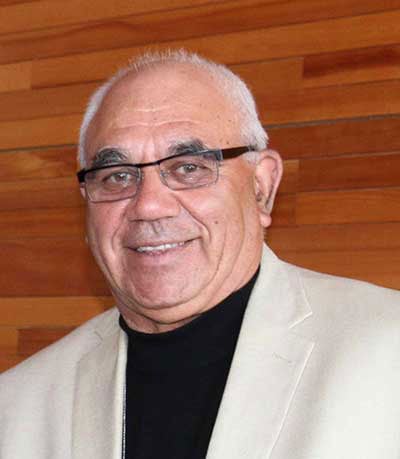
Professor Bob Morgan
Democracy, as a concept and a form of governance, was first introduced by the Greeks around 507 BC.
The Greek term for democracy is demokratia, fundamentally ‘rule by the people’ (from demos, ‘the people,’ and kratos, ‘power’).
According to historians, one of the forces that led to the introduction of democracy by Cleisthenes was the growing discontent of the middle and working classes, who were outraged with the Athenian aristocrats who enjoyed a monopoly over political decision making and wealth.
The aristocrats had little interest in what was happening to middle- and working-class people, but perhaps their main worry was the fact that the middle- and working class made up the vast majority of ancient Greek society, including the army, so if revolt occurred, the aristocrats would have had little defence.
It could be argued that Indigenous nations across the globe had a form of democracy that pre-dated the advent of Greek democracy.
Indeed, it is generally acknowledged that the system of governance that was operated by the Iroquois Confederacy in the US was one of the sources that informed and inspired the US Constitution.
But the question of who did what first is not as important, to me, as is the question of how the virtuous concept and practice of democracy has been contaminated
But the question of who did what first is not as important, to me, as is the question of how the virtuous concept and practice of democracy has been contaminated, and is severely under threat of privatisation by the growing influence of big money and the alarming concentration of wealth.
If ever there was any doubt of the growing divide between the filthy rich and ordinary good and decent people who often struggle to make ends meet, we need to look no further than what’s been happening in the USA.
Matt Egan, who writes for CNN Business, draws upon a report prepared by the Institute of Public Studies, explaining that during the pandemic, and at a time when millions of Americans have lost their jobs and the means to support their families, the wealth of US billionaires has increased by $565 billion.
The IPS report shows that the ‘total wealth for billionaires in the US now stands at $3.5 trillion, substantially higher than what it was at the beginning of the pandemic’.
Egan further reports that Amazon’s boss, Jeff Bezos, is now worth $36.2 billion, more than what he was worth on March 18, 2020, several weeks into the COVID-19 pandemic.
This 21st Century form of ‘privilege’ is indecent, but of course the source of billionaire’s wealth is not the only thing that is obscene
This 21st Century form of ‘privilege’ is indecent, but of course the source of billionaire’s wealth is not the only thing that is obscene; it is also the fact that this obscenity is often enabled, sanctioned, protected and privileged by ‘democratic’ governments whose path to government is often made possible by financial support from big money, including media moguls.
In Australia, an ever-increasing chorus of voices are questioning political parties and their lack of representation of the social, cultural and gender diversity of our country.
A level of concern is growing that politicians are disconnected from the realities of those who elect them to serve.
For many, politics seems to be viewed as a career pathway, an opportunity to govern, with service being of secondary importance.
The seemingly dispassionate way that the federal government has handled the situation of thousands of Australians who are stranded overseas owing to COVID-19 is disturbing, especially when sportsmen and women, entertainers and tourists are freely entering the country.
The absence of empathy is an evil, because when we stop caring about those who we share the planet with, something inhuman and indeed evil is bound to happen.
During the 2020 finale of the ABC’s Q&A TV program, whose title was The Year That Changed Us, former NSW Liberal MP, Michael Yabsley, when asked if he would take a vaccine by Q&A moderator, Hamish MacDonald, he responded by saying: ‘Yeah, I’d take one straightaway, once the efficacy of the vaccine has been established’.
‘But for reasons that are both symbolic and substantive, I don’t think the vaccine should be free’.
It was this last point that stunned me.
Our country was struggling to deal with a pandemic that was killing millions of people across the globe
Our country was struggling to deal with a pandemic that was killing millions of people across the globe, and Yabsley was arguing that the one thing that could end the pandemic, a vaccine, should not be free.
In Yabsley’s model of care, only those who could afford the vaccine would get a jab, the rest would seemingly be dispensable.
Thankfully, Yabsley is no longer in a position to make or influence such decisions.
Democracy, as it was originally conceived, is a truly virtuous and noble ideal, but down through the ages it has obviously been contaminated and placed under assault.
However, it is heartening that people are questioning this assault, seeking answers about whose purposes democracy serves and if it has become a means of perpetuating privilege.
It is hoped future generations will demand, and put an end to, social inequalities, unfettered greed and consumerism/materialism so that true democracy and empathy is allowed to flourish. I am captured by hope.
Professor Morgan is a Gumilaroi man from Walgett western NSW.
He is a highly respected and acknowledged Aboriginal educator/researcher who has worked extensively throughout Australia and internationally in the field of Aboriginal knowledge and learning for over forty years.
Professor Morgan is currently Chair of the Board of Aboriginal and Torres Strait Islander Studies, Education and Research (BATSIER), and also serves as Conjoint Professor with the Wollotuka Institute with the University of Newcastle.
 For four decades The Echo has printed the stories some people loved, some people hated, and some pretended not to read. If you want us to keep telling the truth, the real truth, not the sugar-coated version. We’ll need your support to keep the presses rolling.


