


‘Softly, softly, catchee monkey’, as the saying goes.
It’s so hard to introduce urgently-needed reforms in today’s fevered media climate that governments tiptoe around problems and hardly dare to act.
Inequality is at an all-time high, and people are desperately struggling to pay rent and buy food. Very many are also homeless. So much needs to be done.
When a government does try to introduce changes, they are shouted down by the opposition trying to score political points with full support from the conservative media and their commentators.
No wonder Anthony Albanese soft-pedalled during his first 20 months in government.
Finally, at the beginning of the year, he decided he had to act.
He recalled his colleagues early to propose the unthinkable – to break his oft-repeated promise to leave the stage three tax cuts alone.
Naturally, the opposition criticised him for wasting taxpayers’ money on MPs’ air fares but, when Albo and his colleagues announced they were rejigging the tax cuts, Dutton bellowed they needed to take them to an election, and Sussan Ley announced they would reverse them if reelected. Murdoch media as usual had a field day.
Albo pointed out helpfully that it wouldn’t be possible to have a joint half-Senate and lower house election until the latter half of the year, unless a double dissolution trigger were available, which it wasn’t.
Then something strange happened. Shadow Treasurer, Angus Taylor, dusted off his abacus and discovered to his horror that the majority of LNP voters would be better off. The Dutton team was in a real quandary. If they voted against the revisions they would disadvantage their own supporters. If they voted for them, they would seem like hypocrites supporting the ‘broken promise’. It was a classic wedge. They caved in and diffused the issue at the same time.
It’s possible the Albanese government had its eye on the Dunkley by-election being held on March 2. Governments often lose mid-term by-elections.
If so, will it work?
An Australia Institute poll held two weeks ago shows Labor leading the Liberal Party 52 per cent to 48 per cent in Dunkley, after preferences are notionally distributed. Two-thirds of voters support the changes. More than a quarter of Liberal voters also support them.
Broken promises
Most governments are obliged to break promises and suffer the opprobrium for doing so.
Look how John Howard broke his promise to not introduce a Goods and Services Tax (GST) in 2000. It replaced the cumbersome wholesale sales tax and various state and territory government taxes. He got away with that, and stayed on until December 2007.
On the eve of the 2013 election, Tony Abbott promised: ‘no cuts to education, no cuts to health, no change to pensions, no change to the GST and no cuts to the ABC or SBS.’ He massively broke those promises in the 2014 budget. He paid a personal price, but the LNP stayed in power for another eight years.
Will Albo and Treasurer Jim Chalmers now have the courage to introduce more urgent reforms to pay for health, education, housing and climate action?
Changes to negative gearing may be a bridge too far, but surely reforming capital gains tax is possible? John Howard gutted capital gains tax, and that has led to much greater inequality in this country.
How about a wealth tax, as requested by millionaires attending the World Economic Forum in Davos? A three per cent wealth tax on the richest 250 Australians would generate $15 billion a year. Think how many homeless could be accommodated with that.
It’s only a question of the Albanese government having the courage to do it. The ‘softly, softly’ approach simply wasn’t working. They were obliged to make a difficult choice and did so successfully.
We expect our elected representatives at every level of government to represent the interests of the people who put them there, and have the courage to make difficult decisions. If they don’t listen and act, they will pay the price at the ballot box.
Here in Byron Shire, we have a classic case of local government believing they had to allow a controversial development.
Wallum in Brunswick Heads is a 30-hectare area sacred to local people and home to koalas, black cockatoos, gliders and the vulnerable wallum froglet. There’s no way this area should be cleared for housing when there are many other cleared acreages in the Shire that could be used instead.
Houses built there will not be for the homeless, they are strictly for millionaires. It’s very likely there will be significant protests at Wallum and people may well get arrested.
People are getting desperate at inaction of governments on important issues, and laws against protesting have been tightened. Governments under pressure from the people do act, as the Albanese government did on the tax reforms. We all need to come together as a community to ramp up pressure at every level of government.
People lead, governments follow.
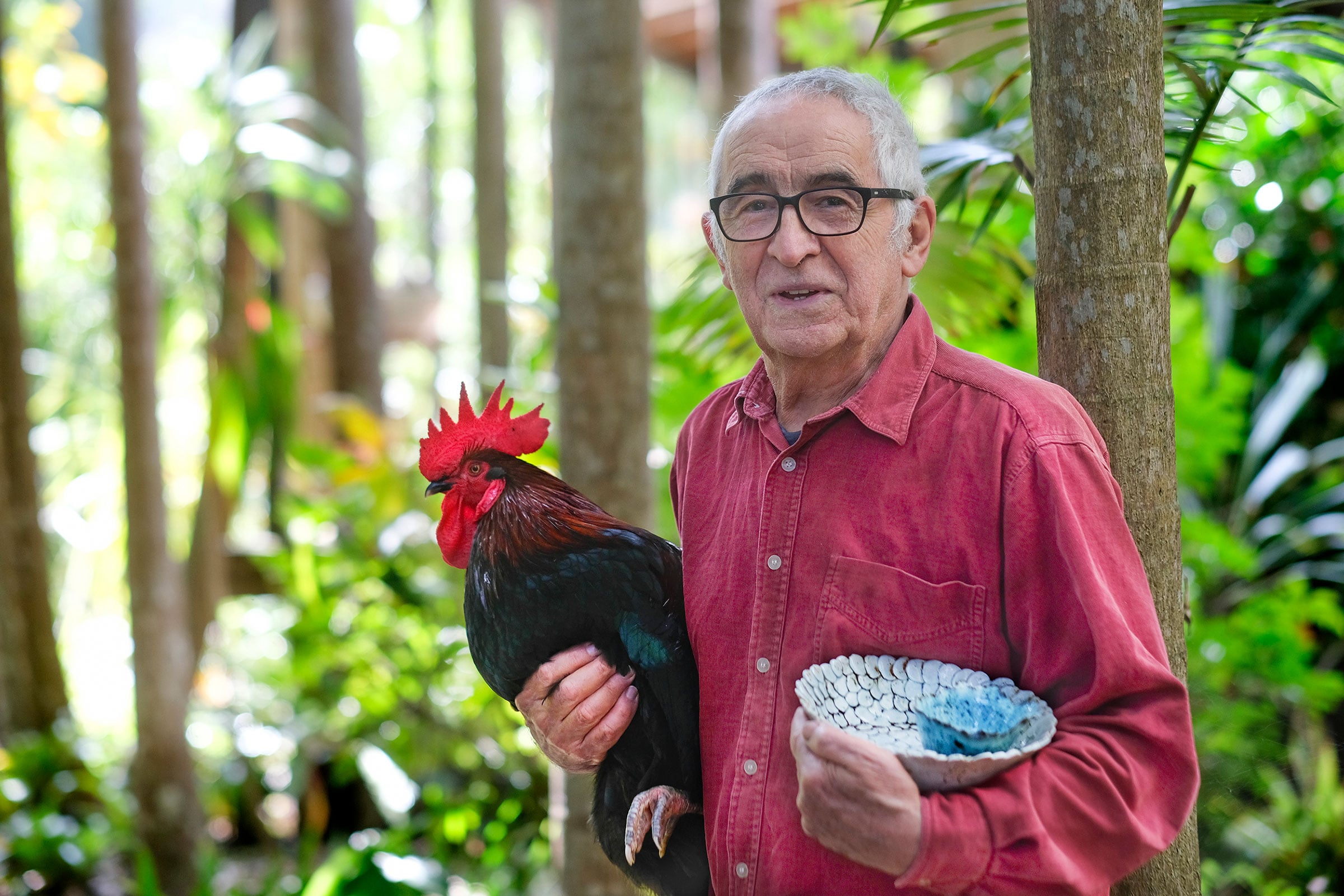
Richard Jones is a former NSW MLC and is now a ceramicist.
 For four decades The Echo has printed the stories some people loved, some people hated, and some pretended not to read. If you want us to keep telling the truth, the real truth, not the sugar-coated version. We’ll need your support to keep the presses rolling.


